
I love a book by Justin Cronin called "The Passage." I highly recommend it if you like stories about post-apocalyptic vampires and girls who save the world. In that world, folks tell each other, "All eyes." It means to be careful. Be alert. Be vigilant. In the world of the mold sensitized, the saying absolutely applies.
As a mold remediator, one of the most frustrating things to see is poor work from the exterior contractor hired to put things back together correctly. Exterior contractors handle the roof, windows, doors, siding, and exterior sheathing (the wood under your brick, stucco, or siding). You know…the things that are kind of important when it comes to keeping water out of the house. I rarely get to see this aspect of a project, but when I do, it is too often grim. I have utter faith that clients did their research, got recommendations, interviewed, and asked the right questions…but often, the contractor does whatever they want to do when it's time to do the work. They can mess up the waterproofing aspect of their job, or fail to follow the manufacturer's instructions for the materials they're installing. Sometimes, it is incompetence or confident ignorance. Other times, it's duplicitous: they may sell you expertise at the estimate appointment but know the install will be a clown show. And who pays? You. Because in 5, 10, 20 years…you'll have water damage, rot, and mold right back in the exact same place.
Two recent stories showcase this situation:
Story 1
We have a current project. We'll call the client Liz. Liz is mold-sensitized, incisive, and understands both the big picture and the details. She does her research and consults experts. Liz wants to get things perfect because this is going to be her forever home. In other words, she is intelligent and highly motivated. Liz recently bought a 1950s home in Arlington, VA that is solidly built. It suffered typical minor water damages from past window, roof, and plumbing leaks and high humidity created mold on the basement's overhead framing. We did extensive demolition to open every perimeter wall and soda blasted the basement wood framing. We were onsite last week with the exterior contractor. When they pulled out a window or section of sheathing, we sanded the moldy wood framing before they installed the new materials. That phase went smoothly. When her contractor is done banging on the house, then we will begin Small Particle Cleaning.
However, the next day Liz texted me a bunch of pictures of the installation. She circled portions of the pictures and wrote that the contractor's housewrap and flashing "looks like crud."
Window flashing: a critical, thin material (aluminum, vinyl, or tape) installed around window frames to create a waterproof, airtight seal, preventing water intrusion, rot, and structural damage.
Housewrap: The "raincoat" of the house. A water-resistive barrier installed over sheathing to protect against moisture intrusion while allowing water vapor to escape, preventing rot.
Both are critical for mold prevention. I'm no expert in housewrap and flashing…but her pictures didn't look right to me either. I asked our head tech, Donnie, to take a look. He's no expert, but knows more than I do. He looked up the housewrap manufacturer's instructions online and found several things her contractor didn't do.
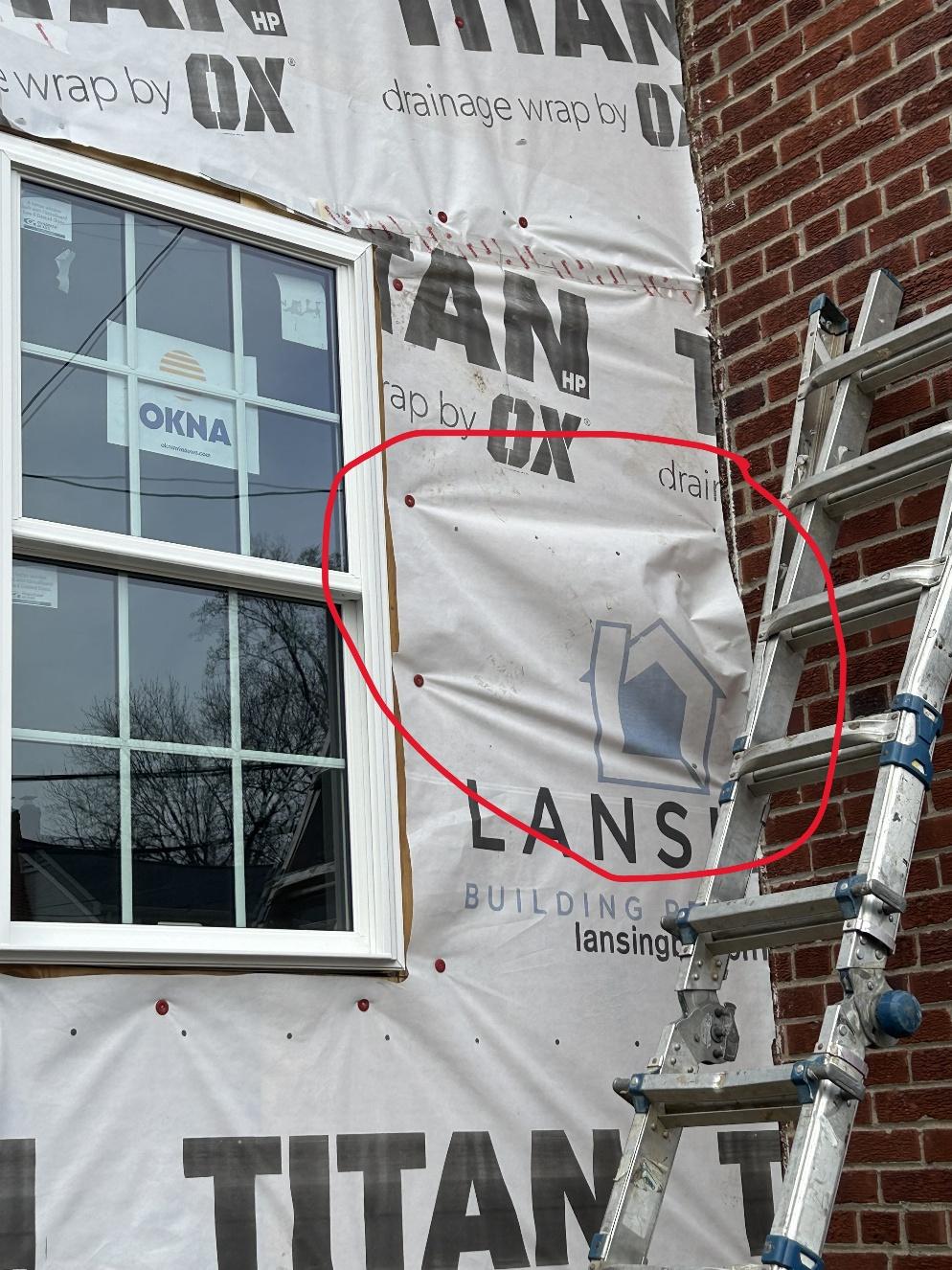
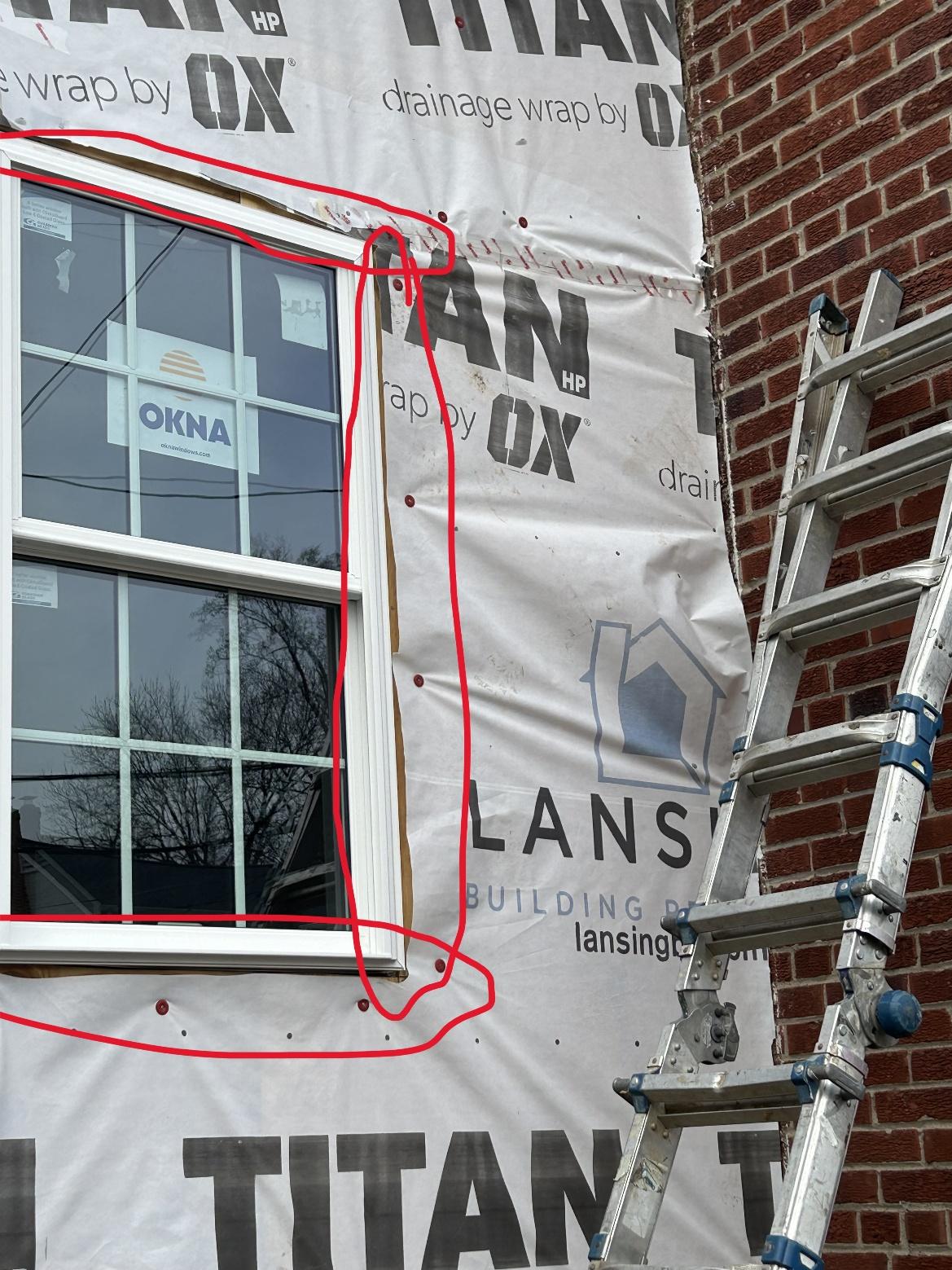
There's no flashing between the window and housewrap. This should be common sense.
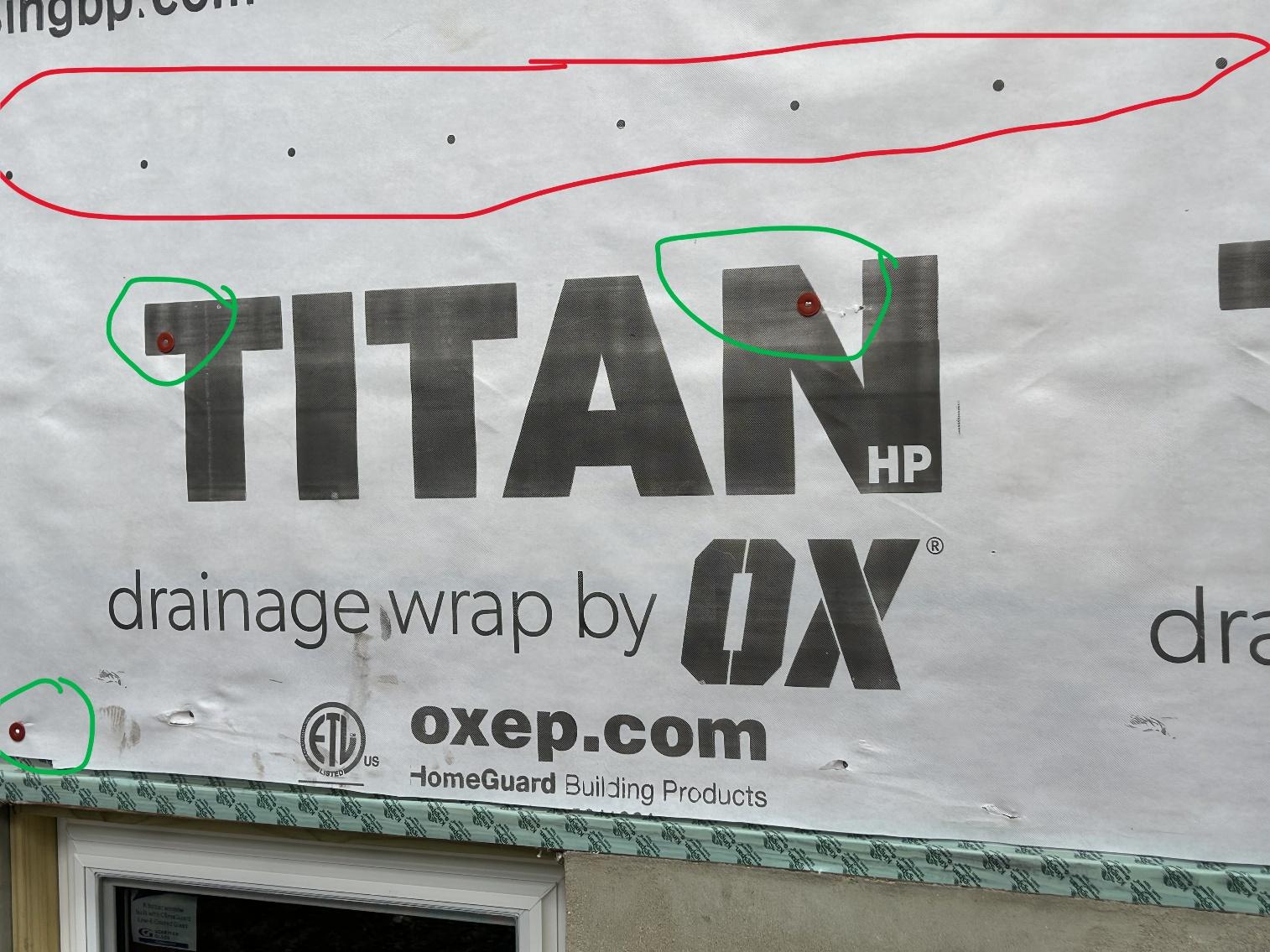
Manufacturer's instructions say to "install a fastener every 12" to 18"." I circled the fasteners in green. Those black dots (red circle) on the housewrap are spaced every 8". It’s safe to say that the contractor is missing a lot of fasteners. They have a fastener every 40"!
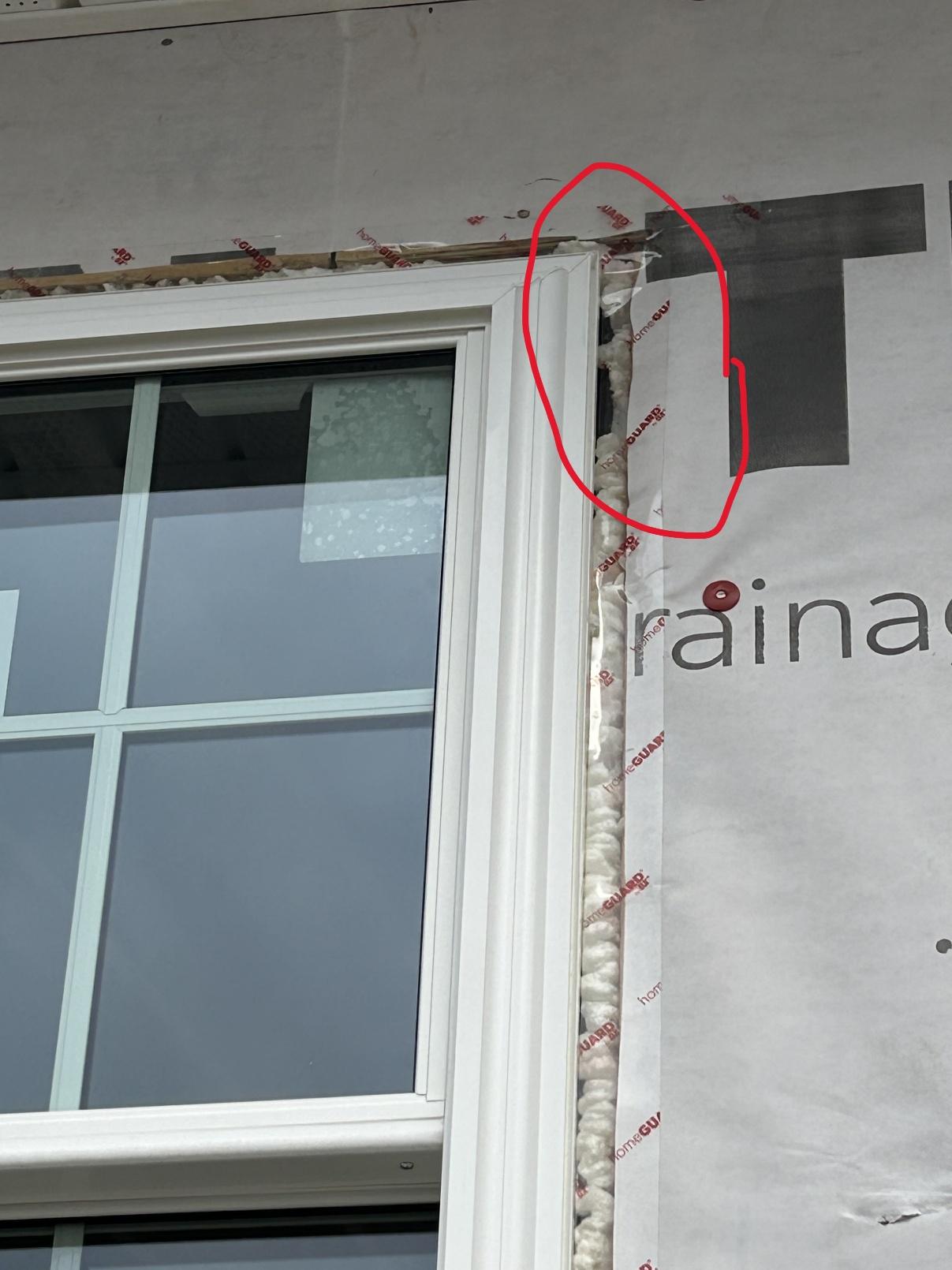
If you're spray foaming the gap between the house framing and the windowframe…there shouldn't be gaps in the spray foam. And the flashing tape was applied, so now the tape needs to be ripped off to fix the spray foam underneath.
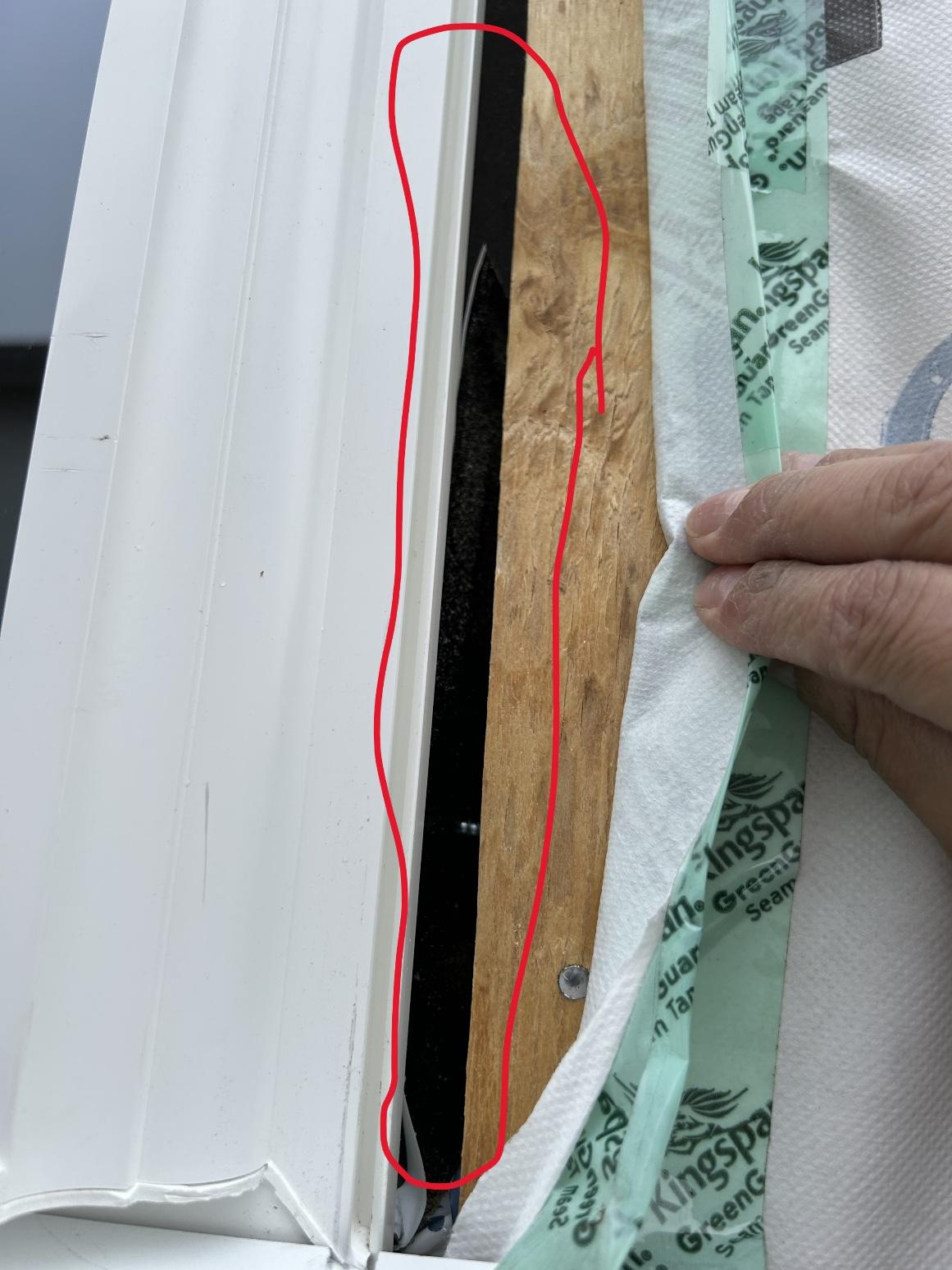
Again, this should be common sense. Some window frames weren't spray foamed at all.
Liz and the contractor are currently at an impasse. The contractor maintains there's a new standard for flashing and that's what they're following. Maybe there is. Maybe they're full of it. But there is an ASTM standard for testing water leakage on a window. One sets up a special rig that sprays a specific amount of water, at a specific pressure, for a specific amount of time. Liz is thinking of having a forensic construction engineer do this as the final proof. The problem is these engineering firms charge tens of thousands of dollars to run the test.
Story 2
This story lives on in Valor Mold Removal lore. We had a client two years ago in Maryland. We will call her Anna. Anna's child has PANS and autism. Their doctor found a direct link between mold exposure and her child's violent outbursts. Anna had a large home built in the 1980s and had lived there for 10 years. Anna had the house assessed by four different top-notch mold assessors/consultants/IEPs. Many areas of concern were flagged. One of them was an overflowing gutter that caused rot on a section of wall. This rot went down two levels of the home. We knew the wood siding and sheathing were rotted, but it was unknown whether the mold affected the structural wall framing too. Therefore, Anna had an exterior contractor lined up to replace all the siding, sheathing, and, if necessary, wall framing around the entire house. We'll call the contractor Colon. She also hired an architect to do weekly visits to check Colon's work. The architect endorsed Colon's past work and was an expert on exterior waterproofing and the local county codes. To me, it sounded like Anna was bringing in pros and this project sounded promising.
As soon as the siding came off, mold and rot were visible under nearly every window of the house.
Anna had us build negative air pressure containment on the inside around all the damaged windows, then cut out the wall and insulation. We had a front-row seat as to what framing was damaged. Anna told Colon to replace all the sheathing on the entire house, plus any wall framing we said had to go. My lead tech told Colon every couple of days which sections of wall framing needed to be replaced. Colon would later tell my lead tech, "Okay, we replaced it." My lead tech would check and was 95% sure the framing was not replaced. We would tell Anna…and Anna would defend Colon tooth and nail. There were other problems too. To name one, Colon's crew would tromp through our containment when we weren't there, and then deny it. C'mon guys. We have sticky mats and tear off the top sheet at the end of our workday. We know these work boot prints in the morning aren't us. This back and forth went on for weeks and it was stressing out my lead tech. This culminated in an onsite meeting between me and my guys, Colon and his crew, the architect, and Anna. During the course of our meeting, we did a tour of the property.
Some memorable scenes:
Donnie: This section of wall framing wasn't replaced.
Colon: We did replace it. Look! It looks brand new.
Donnie: That's because we sanded it. But look, there are rusty nails in the wood. You're telling me you have a box of rusty nails to install new framing? I'll go get you a box of new nails right now.
Colon: Well, I don't know about that. But it was replaced.
Donnie grabs saw. Chops out a section of framing. Flips it over. The underside is moldy.
Colon: Oh. We missed that.
Donnie: The flashing around the windows wasn't installed correctly.
Colon: I've been doing this for 35 years! I know what I'm doing!
Donnie pulls out his phone. Goes to the manufacturer's website and pulls up the specs.
Donnie: Here. Look. The flashing's overlap isn't wide enough. You've been doing it wrong for 35 years.
Colon: No! Our work is good!
Architect looks at Donnie's phone and looks at the flashing. Agrees Colon's work wasn't done correctly.
I wasn't privy to the total cost, but this was at least tens of thousands of dollars of exterior work. Maybe hundreds of thousands of dollars. All done wrong. All had to be ripped out and done again. And if it wasn't caught, Anna would have the exact same problem, all over again, several years from now.
The cherry on top? I got a call from Anna about a year later. The county was demanding Anna rip off all the siding and sheathing so it could be inspected. Apparently, no one applied for a permit to remove and replace the exterior sheathing. Not the architect. Nor Colon. I did Anna a solid and wrote a letter to the county that it was for mold remediation, and therefore an emergency project.
These are just two stories. I have more with:
- Several door contractors installing brand new doors onto rotted wood framing.
- Roofers putting no flashing around chimneys, vent stacks, etc.
- One roofer who installed brand-new moldy plywood, fresh from the lumberyard, onto the house where they just tore off old moldy plywood.
Like the Russian proverb and Ronald Reagan said, "Trust, but verify." Spend some time reading the manufacturer's instruction manuals. They're written for blue collar guys like me, so they're not too difficult to follow. Inspect your contractor's work yourself, or hire a consultant, engineer, or home inspector to verify it for you.
All eyes.
About the Author:
David Myrick is owner of Valor Mold, a mold remediation company in the DC metro area since 2006. He did bad remediations, like everyone else, for a couple years. Then two mentors convinced him to take his first mold training class and was shocked at what the S520 Mold Remediation Standard said. He’s been remediating mold for 20 years and has appeared on Fox 5 news, WTOP radio and other major news networks in the DC market.