
Research Surveys
Through independent research, we fill critical data gaps to
advance education, awareness, and policy reform.
The Issue: We can’t fix
what isn’t measured.
When indoor air quality is ignored, inspections miss problems, remediations are done poorly, and people get sick. Homes and buildings stay unsafe. Problems grow.
Through our surveys, we go directly to homeowners and renters, collecting independent, comprehensive data about their experiences. The responses are analyzed by an independent research firm, and the findings are presented in detailed, evidence-based reports.
This rigorous approach ensures the data is credible, accurate, and actionable which gives families, professionals, and policymakers the insights they need to raise awareness, understand real challenges, and drive meaningful policy reform.
In 2025, we conducted and published our first national survey on privatized military housing, which is linked below. Stay tuned in 2026 as we prepare to conduct our second nationwide survey on the inspection and remediation experiences of homeowners and renters.
When the problem is urgent, reliable data isn’t optional, it’s essential.
Mold Inspection & Remediation Consumer Survey
Change the Air Foundation is conducting the first comprehensive national survey asking homeowners and renters to share their first-hand experiences with mold inspection and remediation. We are asking the questions that get to the heart of what consumers encounter, what they are told, what they pay, and what actually happened in their home. The result will be the first credible, comprehensive picture of consumer experience in this industry at a national scale.The survey was developed in collaboration with Untold Research, a third-party research firm who will independently analyze all findings. All responses are completely anonymous. Results will be published in a full public report in the fall of 2026.
How this data drives change:
Policy Reform
Advocating for mold remediation standards, certification requirements for inspectors and remediators, and consumer protections at the state and federal level.

Industry Improvement
Better data on what companies are actually doing leads to better practices and better outcomes for everyone.

Public Awareness
Concrete statistics transform individual experiences into documented evidence of a systemic problem.
Thank you for helping us build the data that drives real change.
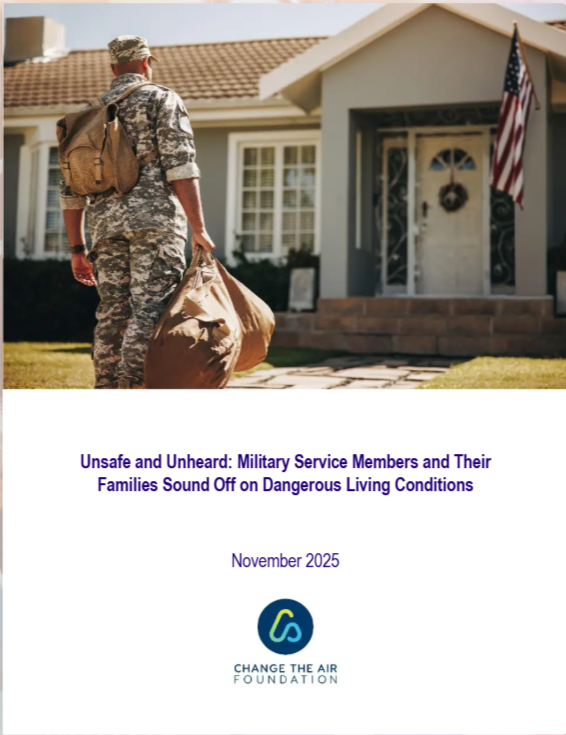
Unsafe and Unheard: Military Service Members and Their Families Sound Off on Dangerous Living Conditions
In October 2025, Change the Air Foundation surveyed more than 3,400 military service members and their families to collect vital data on the conditions of privatized military housing. The results, published in “Unsafe and Unheard: Military Service Members and Their Families Sound Off on Dangerous Living Conditions,” exposed serious gaps in housing safety and helped drive critical federal policy changes.
This Work Only Happens Because of You
Every survey we conduct, every report we publish, is made possible by the generosity and support of our donors and community. Your contributions fund independent research, help us reach homeowners and renters directly, and ensure that the data we collect is credible, accurate, and actionable.
Because of you, families and communities gain a stronger voice, professionals have reliable information to improve practices, and policymakers have the evidence they need to make meaningful change. Thank you for making this work possible.
Copyright 2026 Change the Air Foundation , a 501(c)(3) nonprofit organization, EIN 88-0804383