
Unsafe and Unheard:
Military Service Members and Their Families Sound Off on Dangerous Living Conditions
Between October 6–27, 2025, Change the Air Foundation conducted one of the most comprehensive independent assessments of living conditions on U.S. military bases. Our goal was straightforward: to gather trusted, unbiased data showing how today’s military housing conditions affect mission readiness, influence retention, and—most importantly—impact the health and safety of service members and their families. We set out to capture the true scope of the housing
crisis so we could deliver these findings directly to lawmakers and government officials.
A total of 3,401 service members and families from 57 military installations across 30 states and the District of Columbia completed the survey. Untold Research provided an independent analysis and authored the final report, “Unsafe and Unheard: Military Service Members and Their Families Sound Off on Dangerous Living Conditions.”
The results reveal a force-wide crisis affecting both the health of military families and the readiness of the U.S. Armed Forces. The widespread presence of hazardous conditions combined with unresolved maintenance issues, declining physical, mental, and cognitive health of our service members and their families demonstrates that the current systems and policies in place are neither effective nor acceptable.
“We will forever live with the damage of moldy military housing. Our recovery is only expected to be 75-80% of where our health as prior to living in moldy housing. Our future medical costs are estimated to be close to a million dollars.”
– Active Army Service Member in North Carolina
REPORT HIGHLIGHTS
Prevalence of Dangerous Conditions
of Service Members Report
Dangerous Housing Issues
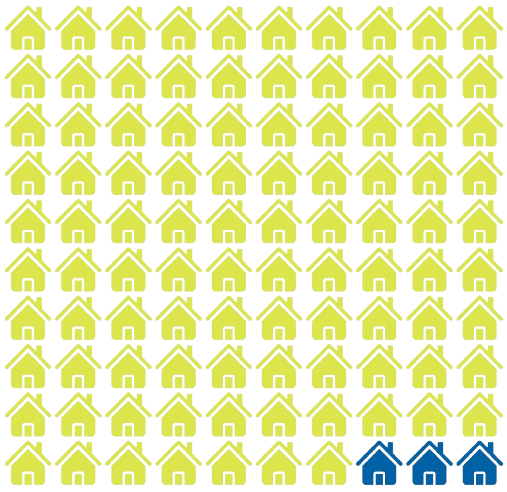
Nearly every single service member surveyed (97%) could list at least one significant and dangerous issue with their military-provided housing.
Of reported issues, mold, mildew, or microbial growth top the list (74%) of complaints.
Maintenance & Systemic Failures
Filed Multiple Reports for a Single Issue
Nearly nine in ten (86%) had to report the same issue multiple times before receiving a service call.

Issues Often Remain Unresolved Despite Reporting
Often issues were marked as “resolved” despite no satisfactory action taken (66%) and a majority (53%) of the time they went unresolved entirely.
Feel Trapped By Mold Issues

Two-thirds (66%) of service members with mold issues in their home feel stuck without further options.
Health & Mission Impact
Report Negative
Health Impacts
Three-quarters (76%) of service members said their family’s health has been negatively impacted from housing-related issues – something nearly one-half (48%) have validated with a doctor’s opinion

Report Impact on
Mission Readiness
Nearly half of service members whose performance and mission readiness have been affected by housing issues
CHANGING LAWS WITH DATA
When military families shared their experiences through our national survey, we didn’t let those voices sit in a report without being heard.
We delivered independently analyzed, evidence-based findings directly to members of Congress and senior Pentagon officials. That data helped shape real legislative solutions and informed federal policy reform at the highest levels.
Below are two major policy victories influenced by this work.
The Bergman Amendment (FY26 NDAA)
Using data from our survey, we helped fill a critical information gap acknowledged by members of Congress: there was little comprehensive, independent data on the scope of mold and moisture in military housing.
Armed with survey findings and technical expertise, we worked alongside congressional offices to advance what became the Bergman Amendment — now federal law as part of the FY26 National Defense Authorization Act.
For the first time in history, all branches of the military are required to follow uniform, science-based mold remediation standards aligned with the ANSI/IICRC S520 standard of care. This landmark provision applies not only to privatized housing, but to all Department of Defense facilities including barracks, schools, child development centers, medical
clinics, administrative buildings, and operational facilities. This amendment is our most significant policy reform achievement to date at the Foundation.
The MOLD Act (2026)
Building on the momentum of the Bergman Amendment, Change the Air Foundation worked directly with bipartisan lawmakers to help introduce the Military Occupancy Living Defense (MOLD) Act in January 2026. While this legislation has not yet become law, it represents a historic effort to address long-standing mold and water damage failures in privatized military housing.
Informed by the data collected through our Unsafe and Unheard survey, and shaped through direct collaboration with congressional offices, the MOLD Act confronts systemic gaps that have left families trapped in unhealthy housing conditions. The bill proposes mandatory independent third-party inspections, full transparency of inspection results and housing history, and enforceable timelines requiring relocation or remediation when homes fail inspection. It also requires the use of certified mold professionals following nationally recognized standards and establishes contractor accountability, including public reporting and financial responsibility when housing providers fail to meet their obligations.
As the MOLD Act moves through committee review, it signals a critical shift toward enforceable protections,
independent oversight, and meaningful accountability for military families. We remain actively engaged to help
ensure this proposal becomes law and delivers the protections service members and their families deserve.
U.S. SUPREME COURT AMICUS BRIEF
In 2025, Change the Air Foundation took a powerful step onto the national legal stage by filing an amicus curiae (“friend of the court”) brief with the Supreme Court of the United States in Vinales v. TC II Privatized Housing, L.L.C.. An amicus brief allows organizations with deep subject-matter expertise to provide the Court with critical context about the broader impact of a case, especially when the outcome could affect families across the country.
Being part of a potential Supreme Court case is rare and significant. It reflects the Foundation’s growing authority on mold and substandard military housing. Our work ensured that credible data, research, and the voices of affected military families were formally placed before the highest court in the nation.
This achievement reflects the commitment of our donors and supporters, whose funding made our military housing survey possible and ensured this issue reached the highest levels of our judicial system. Participation in a Supreme Court case signals not only credibility, but influence—demonstrating that the research, data, and advocacy you support are shaping conversations at the very highest levels of our legal system.
SURVEY MEDIA ATTENTION
Copyright 2026 Change the Air Foundation , a 501(c)(3) nonprofit organization, EIN 88-0804383