
The problem is, most of what’s in the air you can’t see or smell.
These indoor pollutants are often odorless, colorless, and invisible to the naked eye. They cause a wide variety of symptoms that can range from minor to life-threatening.
36 years
spent indoors by the time you turn 40.
*Allen & Macomber, Healthy Buildings
2–5x
higher levels of some pollutants indoors than outdoors.
*U.S. EPA
What's worse—it often takes people years to make the connection between their health and their home, if they ever make it at all.
COMMON SOURCES
What’s in your home’s air?
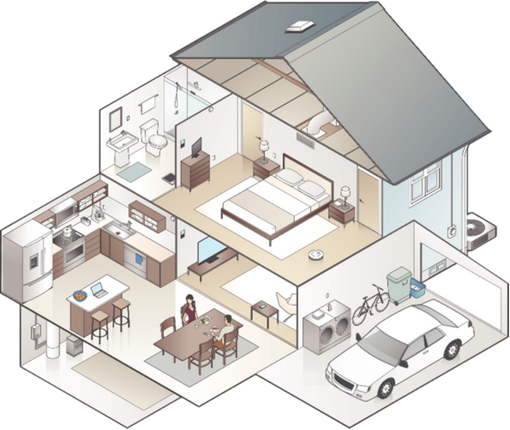
Common sources of poor indoor air quality

Mold and bacteria
from leaks, humidity, and uncontrolled moisture

Harmful gases
carbon monoxide and nitrogen dioxide from gas stoves, furnaces, water heaters, and attached garages, and sewer gases from dry drains or plumbing problems

Carbon dioxide
builds up in rooms without enough fresh air
Radon, lead, and
asbestos
from the soil under your home, and from older paint and building materials when they’re disturbed

VOCs and hazardous air pollutants
from furniture, carpet, paint, building materials, cleaning supplies, air fresheners, and personal care products

Fine particles and smoke
from cooking, candles, fireplaces, and wildfire smoke

Tobacco, vape, and cannabis smoke
secondhand smoke and vapor can linger in the air, and thirdhand smoke, the residue left behind, can settle into furniture, carpet, and walls

Allergens and pests
dust mites, pollen, pet dander, and cockroach and rodent droppings
Pollutants don’t always stay put. Air moves through your whole home, and so does what’s in it.
These families spent years
searching for answers.
For each of them, the answer was hiding in their home.
They shared their stories so others could find answers sooner.
FEATURED STORY
The Hidden Enemy
Military families across the country are uncovering a devastating truth: the homes meant to protect them are making them dangerously sick. Their stories reveal a hidden crisis of toxigenic mold, ignored pleas for help, and a fight for accountability that can no longer be dismissed.
So, how’s
your air?
It’s worth asking when...
Healthy indoor air starts with better information.
Everyone deserves the knowledge to breathe safe indoor air. Explore our free resources.
START HERE
Dealing with mold or water damage now?
Our free step-by-step guidance will help you take the next step safely at home, in military housing, or at work.

Your Home
How your home can affect the air you breathe, and what you can do about it.
Articles · Interviews · Downloads · Research

Your Health
How indoor air can affect your health, with insights from experts and families who’ve been there.
Articles · Interviews · Downloads · Research
Get our free guide,
Mold Remediation at a Glance.
Join our free newsletter and we’ll send you our 20-page guide right away.
Sources:
- 1U.S. Environmental Protection Agency. Indoor Air Quality: Report on the Environment. epa.gov/report-environment/indoor-air-quality. Originally reported in: U.S. EPA. (1989). Report to Congress on indoor air quality: Volume 2. EPA/400/1-89/001C.
- 2Allen, J. G., & Macomber, J. D. (2022). Healthy Buildings: How Indoor Spaces Can Make You Sick—or Keep You Well. Harvard University Press.
- 3U.S. Environmental Protection Agency. Indoor Air Quality: Report on the Environment. epa.gov/report-environment/indoor-air-quality. Originally reported in: U.S. EPA. (1987). The Total Exposure Assessment Methodology (TEAM) Study. EPA/600/6-87/002a.
Copyright 2026 Change the Air Foundation , a 501(c)(3) nonprofit organization, EIN 88-0804383