
You found the mold. You had it remediated. But you or someone in the home still has symptoms. If that’s you, you probably have a lot of questions running through your mind. Maybe you are wondering if mold was really your problem to begin with or maybe you are wondering if something went wrong with remediation. While every situation is unique, here are seven questions to ask yourself if someone in the home is still feeling sick after mold remediation. (And if you feel fine but still have a nagging sense that something isn’t quite right in the home, these questions are for you too.)
One thing worth knowing before we dive in: mold rarely grows alone. The same damp conditions that allow mold to thrive also allow bacteria to flourish. Both can release byproducts that affect indoor air quality and human health. The good news is that safe and effective remediation focused on physical removal takes care of mold, bacteria, and their byproducts at the same time. So, if someone has told you, "It's not mold, it's bacteria," the answer is: it can be both, and the solution is the same.
The questions that follow are the same questions I run through in my head anytime I’m helping someone figure out why they spent a small fortune on remediation and still don’t feel well in their home. At some point I figured it would be easier to write it all down. So, fair warning, this is a longer article. But every question has a “what to look for,” a “here’s where it usually goes wrong,” and a list of questions and resources to help you dig deeper. And please, don’t skip a question because you’re sure it doesn’t apply to you. Trust me. The one you’re most sure about is usually the one that comes back to haunt you.
Question 1: What did mold “remediation” look like?
Now, this may seem like a silly question to start with, but it is probably the most important. In the U.S. (and really most of the world), mold remediation is not regulated. As of September, 2026, only eight states require the person inspecting or remediating your home to be licensed or certified, and only two require that mold remediation follow the industry standard of care or the principles of the standard of care known as the ANSI/IICRC S520 Standard for Professional Mold Remediation (2024).
In most states someone could go to bed tonight, wake up tomorrow, and call themselves a mold remediator without any kind of training, certification, or expertise. The person performing “remediation” may have zero idea what they are doing and there is nothing stopping them from doing whatever “it” is.
“It” could mean bleaching the mold. (Don’t do this.) “It” could mean tearing mold out without any containment or engineering controls. (Don’t do this, either.) “It” could mean workers in full PPE, containment, engineering controls, with physical removal of microbial growth followed by small particle cleaning (SPC) to address any cross-contamination that may have occurred. (SPC is sometimes described as a “HEPA sandwich” or “HEPA pizza”. You’ll see that term come up a few more times in this article.)
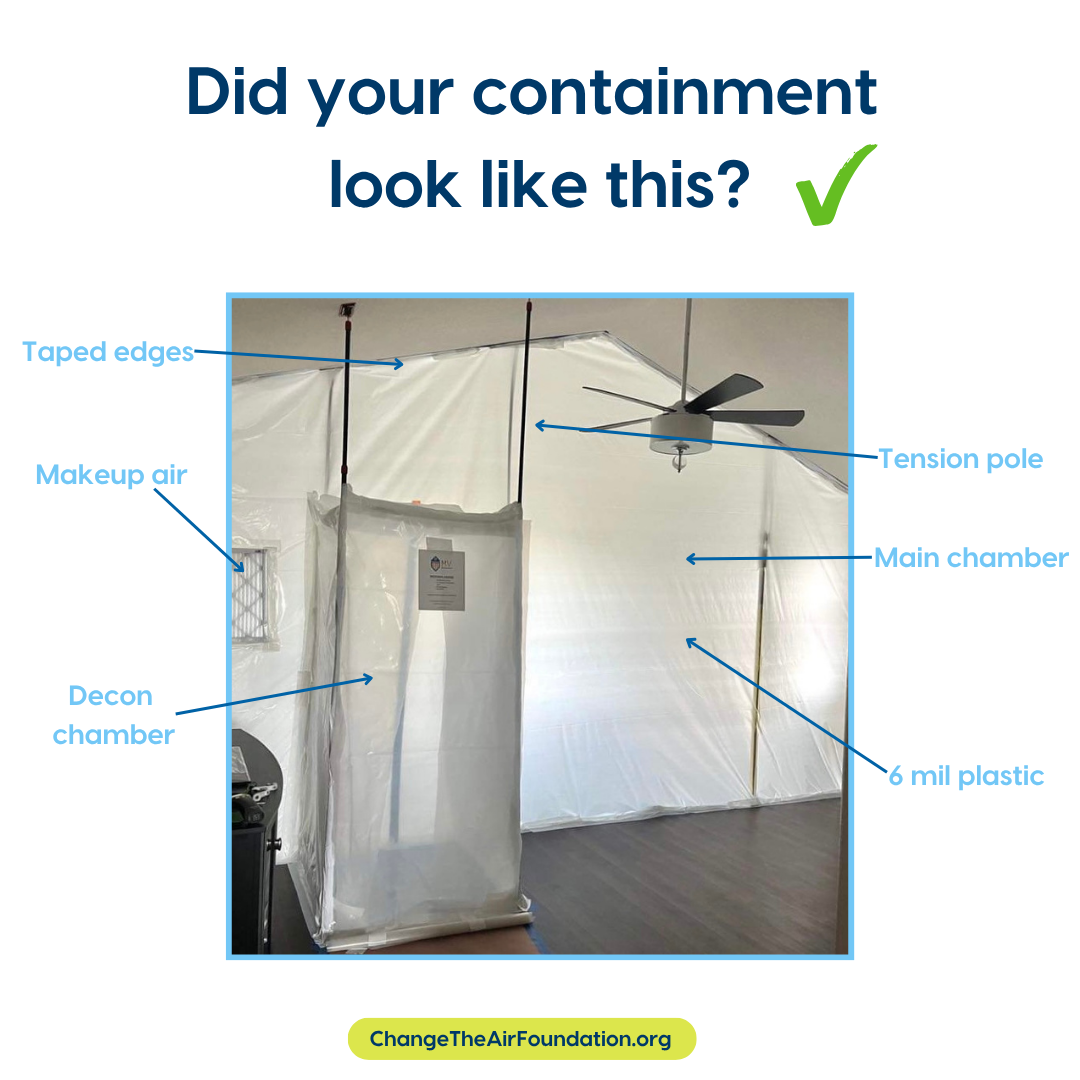
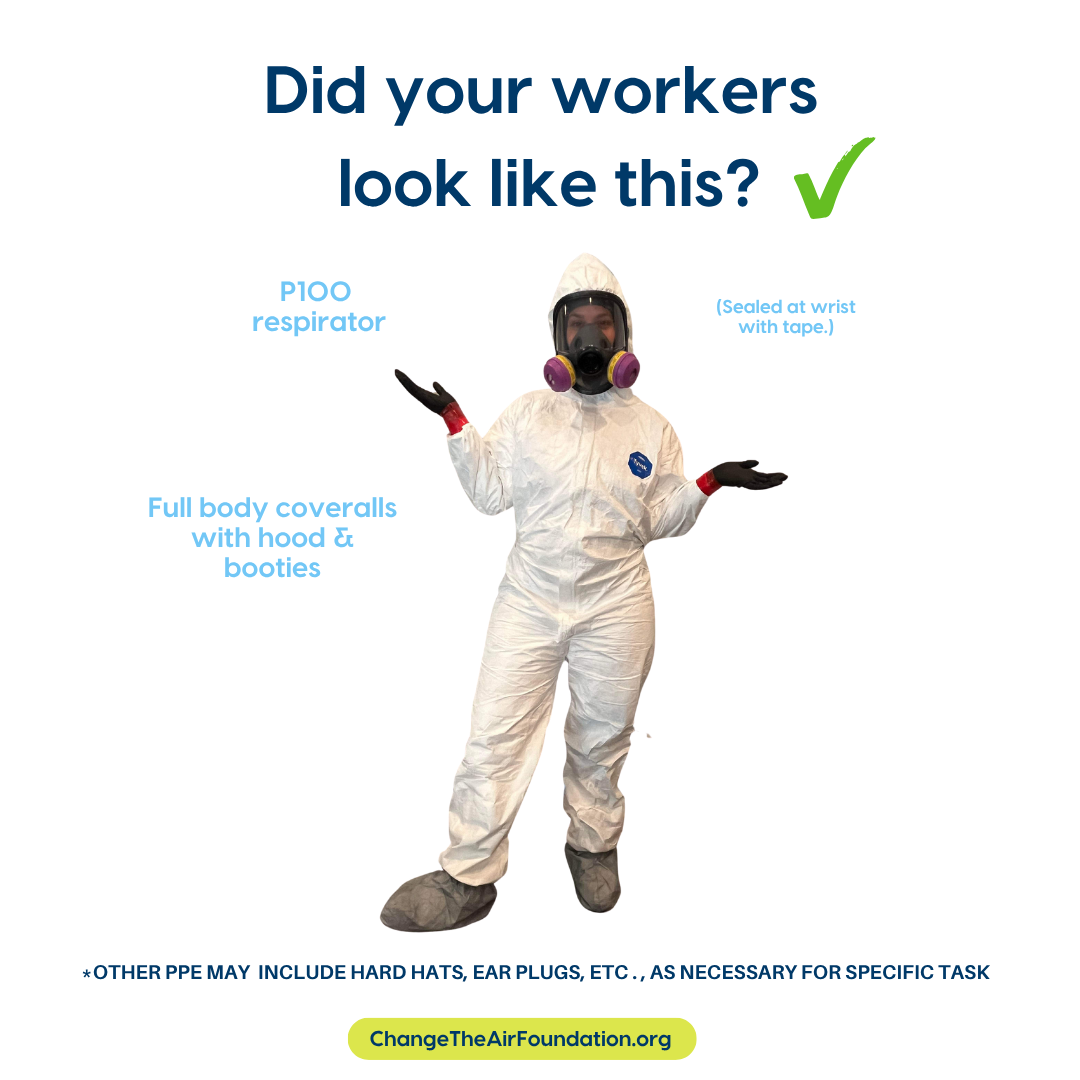
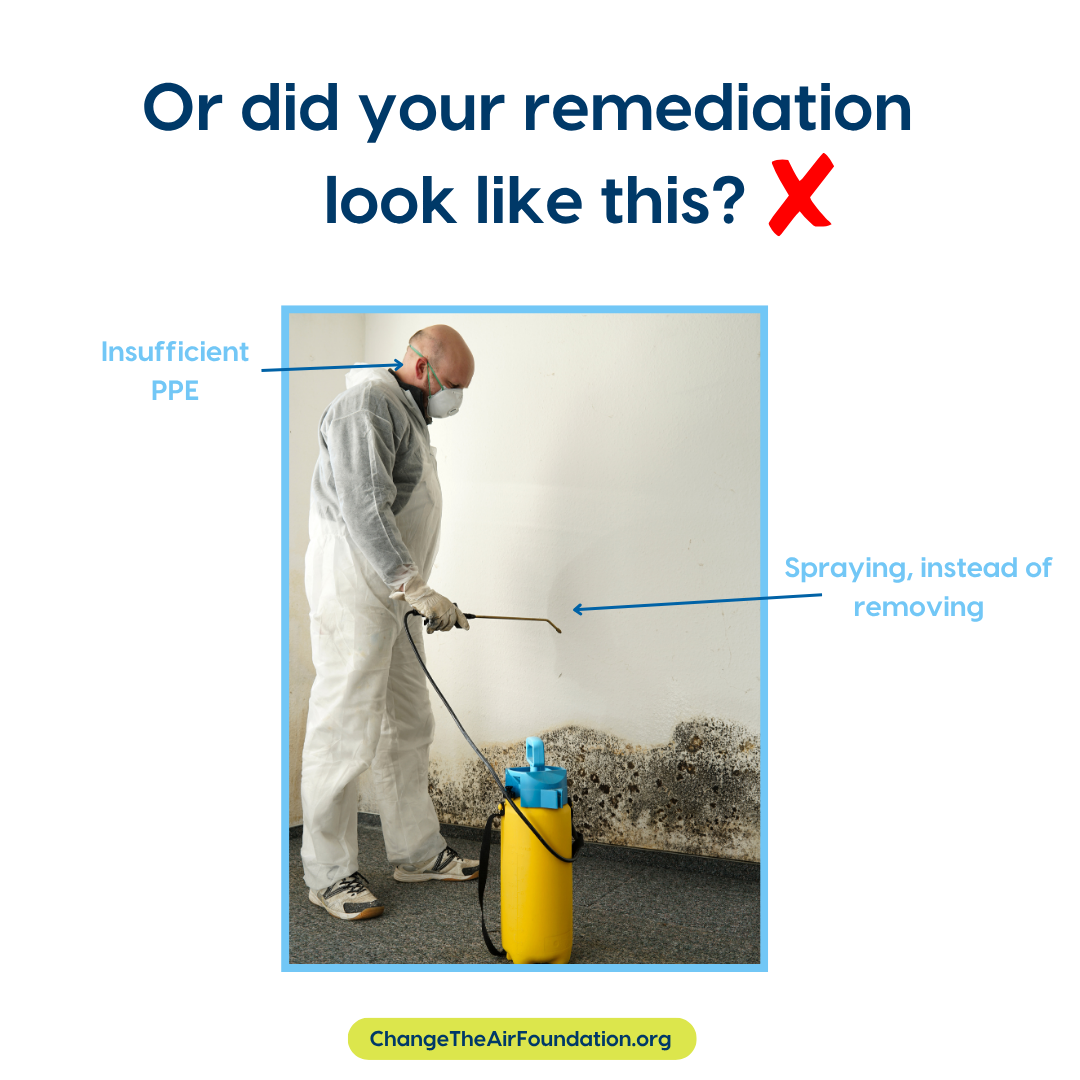
As you can see, a wide range of practices can pass for “remediation.” Sometimes those practices are safe and effective, sometimes they aren't. My mentor, Michael Pinto, is famous for saying, “Sometimes the only thing worse than no remediation is bad remediation.” (To be clear, that's not an excuse to keep living or working in a water-damaged building. It just means when remediation goes wrong, it can make things worse. Sometimes much worse.) That's also why I put “remediation” in quotes. Chances are, when I talk about “remediation,” and you talk about “remediation,” and the contractor talks about “remediation,” we are all talking about different things.
Quick question: Raise your hand if you have been told that you should just pour some bleach or spray a chemical on mold growth. (Is your hand raised? I bet it is.) And honestly, the impulse makes sense. When you find mold in your home, you want it gone. A spray bottle feels like control. The problem is that it isn’t.Trust me, if it were as simple as spraying some bleach on it and praying it’s gone, I wouldn’t be writing this article, and Change the Air Foundation probably wouldn’t exist. But the reality is too many contractors still rely on chemical-only shortcuts such as bleach or harsh chemicals to try and kill mold instead of removing it.
The ANSI/IICRC S520 Standard sums it up well:
“Physically removing mold contamination is the primary means of remediation. Mold contamination should be physically removed from the structure, systems, and contents. Attempts to kill, encapsulate, or inhibit mold instead of proper removal generally are not adequate. The Standard emphasizes source removal by physical methods, therefore, utilizing spray, fog, foam, gas, or other remediation approaches without physical removal, is a deviation from this standard of care.” [Section 1.4 Contamination Removal]
Despite this guidance, “spray and pray” is still so common that I wrote a whole article called “Why Can’t I Just Spray the Mold Away?” It goes into detail about the science of mold growth, the importance of removal, and why “killing” mold is not the right goal. I even discuss some important research on the shortcomings of many chemical products such as bleach, isopropyl alcohol, hydrogen peroxide and even those fancy mold “killing” chemicals you can buy at the store.
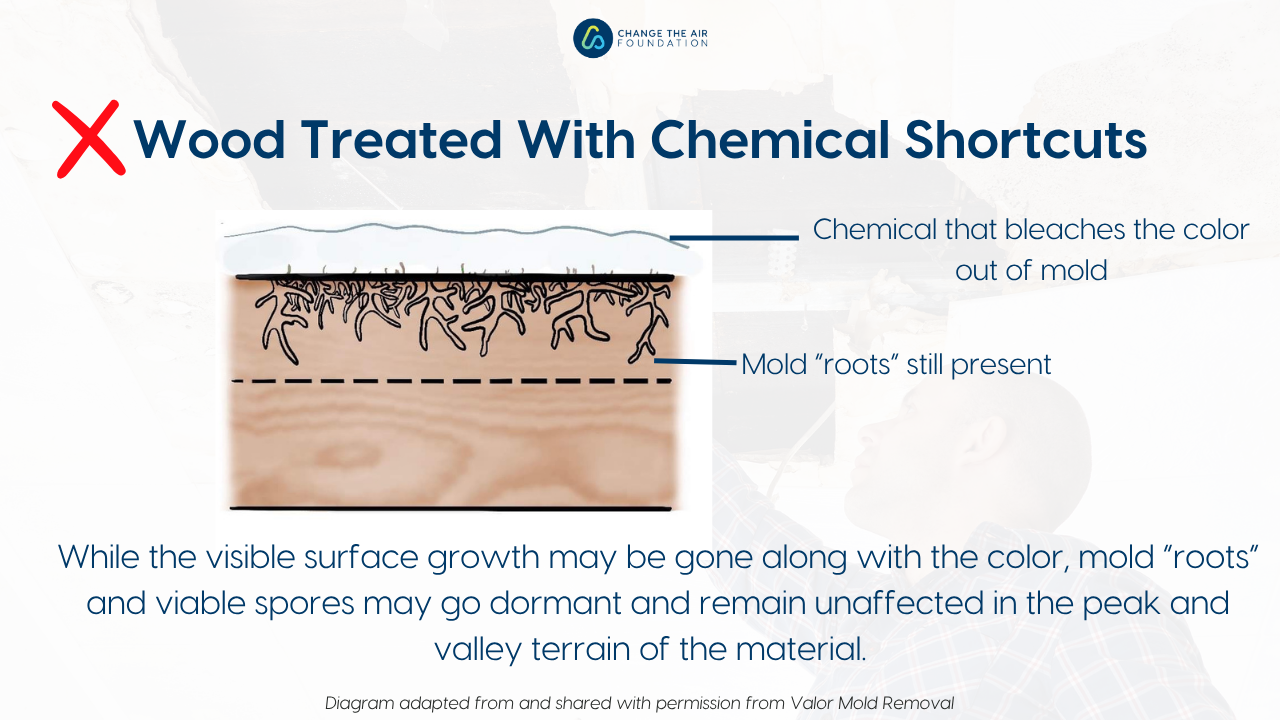
So, if you’re still not feeling good after remediation, ask yourself: What did “remediation” look like? Did the workers wear full PPE? Was containment used the entire time? What about negative pressure? Was the area inside containment cleaned after remediation was completed but before containment was removed, and if so, how?
If you aren’t sure what safe and effective remediation looks like, it’s not your fault. There is little consistency in the industry and few consumer protections. (Something Change the Air Foundation is fighting to change.) Unfortunately, until industry and the laws catch up, homeowners and renters are going to have to learn about what good remediation is and isn’t so they can advocate for themselves. Not to worry though. We have lots of resources to help you understand what safe and effective remediation should look like. I recommend starting with our Free Download, “Mold Remediation at a Glance.”
If you want to learn more about remediation, check out these resources:
- Free Download: “Mold Remediation at a Glance”
- Step 2 of Start Here: Mold in the Home
- Free Download: “Questions to Ask When Hiring a Mold Remediation Company”
- Article: “Why Can’t I Just Spray the Mold Away?”
- Mold Remediation Mini Class: Parts 4-7
- Video: Hiring the Right Team & Order of Operations
Question 2: What did post-remediation verification (PRV) include and what were the results?
Post-remediation verification, or PRV, is exactly what it sounds like: checking and testing the remediated area to confirm mold remediation was successful. Think of it as the final exam. The remediation either “passes” or it “fails.” (Yes, the quotation marks are back. You'll see why in a minute.)
Ideally, the critical details around PRV should be determined and agreed upon in writing before remediation begins. That includes who will perform the PRV, when it must be performed by, what it will include, what counts as a “pass” versus a “fail,” and what happens if it “fails.”
Sometimes people skip PRV altogether. It is, after all, an additional cost on what is likely an already pricey project. Consumers and even professionals may instead rely on the fact that the mold “looks” gone. (Sorry, more quotation marks.) The problem with “it looks gone” is that mold is made up of microscopic parts you can’t always see. So just because they wiped the fuzzy mold growth off the surface and bleached the stain doesn’t mean they have removed the hyphae (root-like structures) that have grown into the building material.
Let’s not forget about the millions of fine and ultrafine particles released during remediation that may still be floating in the air and sitting on every surface. You cannot see any of that with the naked eye. So, unless you or your contractor have microscopes for eyes, you’ll want to test any previously contaminated surfaces to ensure the mold is actually gone.
Before we can figure out whether PRV is a factor in your situation, there are three things you need to understand about it: who did it, when it was done, and what it included.
Let's start with who. PRV should be done by a third party, such as an Indoor Environmental Professional (IEP), not the company that did the remediation. A good remediation company should absolutely assess its own work (known as post-remediation evaluation, or PRE), but that is not the same thing as an independent PRV paid for by the consumer and meant to protect the consumer and their property. Just like a student shouldn't grade their own test, a remediator shouldn't grade their own work.
Next is when. PRV is typically performed within a few days of remediation finishing, but before containment and other engineering controls are removed. This matters more than people realize. If the remediation company tears down containment before PRV has determined the area “passed,” and it turns out the remediation actually “failed,” you just risked cross-contaminating the rest of the home and items in it.
Finally, what did PRV include? There is no legal requirement for what PRV must include or what constitutes a “pass” or “fail.” PRV should include visual inspection, moisture readings, and air and surface testing. I say “should” because it doesn't always.
So where else does PRV go wrong?
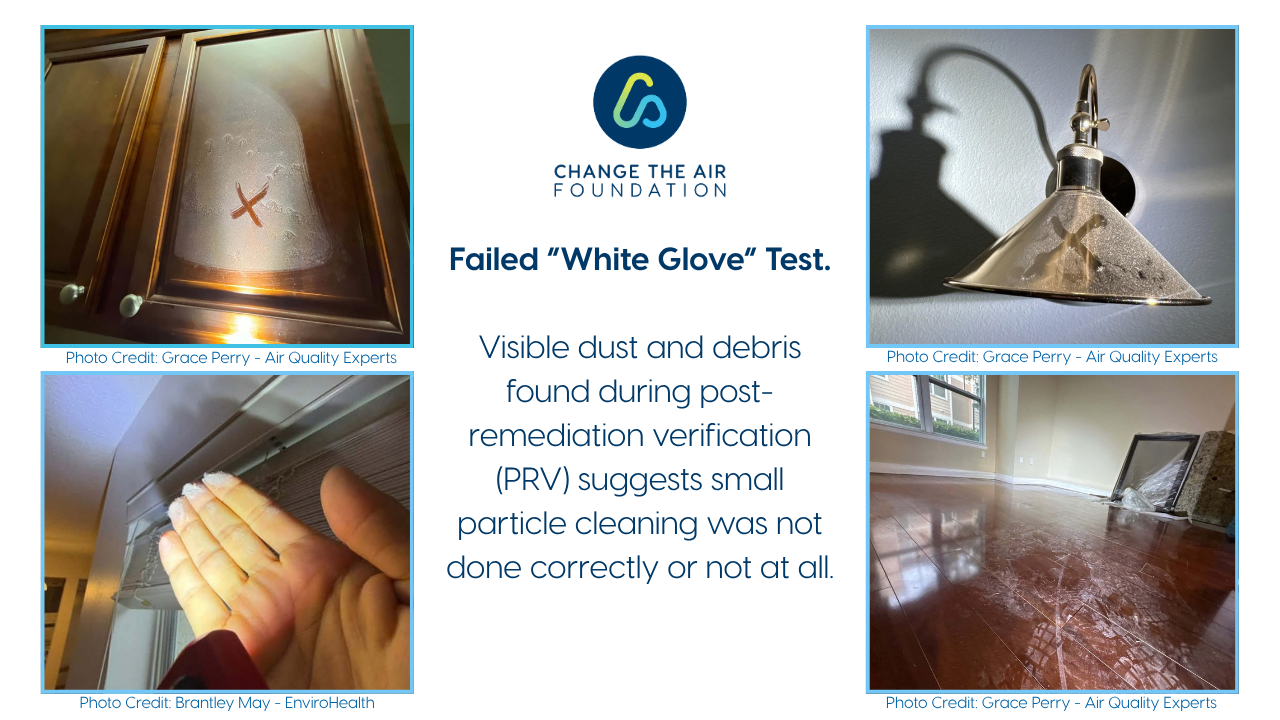
Sometimes PRV is done, but it is done poorly. Take the visual inspection. It’s likely the very first thing any professional will assess. It may seem too simple to be a valid indicator of successful remediation, right? Wrong. If the area inside containment still has visible debris, construction dust, or even trash (yes, it happens), that should be an automatic “fail.” The IEP should stop right there. No need to test. Send the remediation company back to reclean. Why? Because if they left behind debris you can see, guess what else they didn't clean up? Those millions of fine and ultrafine particles you can't see. Visible debris is a big indicator that they skipped small particle cleaning (SPC) inside containment, which is a big red flag. Yet, I have seen IEPs “pass” containment even though there was visible dust and debris on supposedly clean surfaces.
Moisture readings can also be done poorly or not at all. It’s important that the building materials are dry by the time PRV is performed. Since dry is a measurement, it should be confirmed by a moisture meter. This means “it felt dry” or “it looked dry” are not acceptable answers. Yet, some IEPs never bother to take moisture readings. It should go without saying: Not only should materials be dried out, but you must also correct the underlying moisture source, or the problem can return. The last thing you want to do is spend money on remediation only to have to do it again if the mold grows back.
And then there is the elephant in the room (or should I say elephant in the containment?): the PRV criteria. Once again, this is where you will see wildly different practices from one professional to the next.
Sometimes PRV is done, and the criteria were so watered-down that the “pass” doesn't mean much. I’ve seen remediation contracts state that the company could only guarantee their remediation would pass a visual inspection. That’s it. Think about that for a minute. According to the company, as long as the mold “looked” gone, it was a “pass.”
Even air and surface testing, which might seem like a concrete, foolproof way to assess if remediation was effective, isn’t so foolproof. What if an air sample inside containment comes back with three spores of Stachybotrys, a toxin-producing mold? Is that a “fail”? What about five spores? Or one spore? How do we decide how many spores are too many? There are no legal or health standards saying “x” amount of mold is bad, but “y” is okay. So testing and interpretation of results can be subjective. When it comes to PRV, you will find lots of opinions on how many spores of certain molds are acceptable and whether some molds should be “zero tolerance.” This is exactly why you, your IEP, and your remediator need to establish what a “pass” or “fail” looks like, in writing, before the work begins. Our Free Download, “Mold Remediation at a Glance,” digs deeper into PRV criteria.
Simply put, it's not enough to do PRV and have it “pass.” The devil is in the details. So, if you are still sick after remediation, ask yourself: Was PRV done? Who did it? Was it done before containment came down? What did it include? What were the criteria for “pass” and “fail”?
If you want to learn more about post-remediation verification, check out these resources:
- Free Download: “Mold Remediation at a Glance”
- Step 3 of Start Here: Mold in the Home
- Article: “Why Can’t I Just Spray the Mold Away?”
- Mold Remediation Mini Class: Parts 7 & 11
Question 3: Did you clean the rest of the home and belongings after remediation?
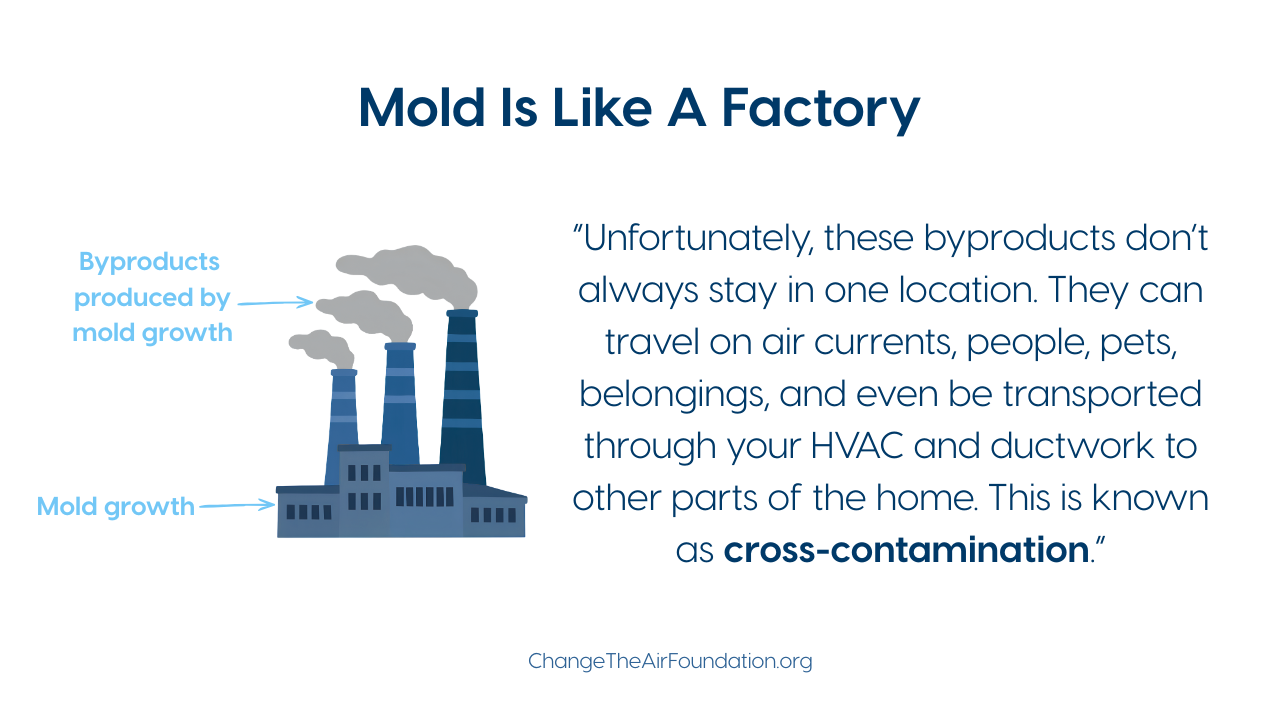
Now you might be wondering, “Why do I need to clean the rest of my home when the mold was in one area?” To understand why this might be a missing piece in your journey, it’s helpful to think of mold like a factory.
When a factory releases smoke into the air, that smoke can cross-contaminate surrounding land, homes, and waterways. The same is true for mold. An active mold colony can release byproducts such as spores, fungal fragments, mycotoxins, microbial volatile organic compounds (mVOCs), and more.
Unfortunately, these byproducts don’t always stay in one location. They can travel on air currents, people, pets, belongings, and even be transported through your HVAC and ductwork to other parts of the home. This is known as cross-contamination. Even though spores, fungal fragments, and mycotoxins aren’t living, they can still cause health issues in some individuals. So, it’s not enough to simply shut down the factory or remove the mold. You have to deal with the pollutants that were already released.
The ANSI/IICRC S520 Standard differentiates between mold growth and the byproducts it puts into the environment using the following terms:
“Condition 1 (normal fungal ecology): an indoor environment that may have settled or airborne mold spores or fragments, or traces of actual mold growth and constituents (e.g. ECM, hyphae, mold fragments), that are reflective of a clean and dry environment.”
“Condition 2: an indoor environment including surfaces and air, which is contaminated with residual mold biomass from a known Condition 3 source in that same environment. This includes spores and fragments, filaments, or extracellular material (ECM) from sporulation, sloughing or production of other compounds (e.g. mycotoxins and mVOCs).[...]”
“Condition 3 (actual mold growth): an indoor environment contaminated with the presence of mold growth that is active, dormant, dead, non-viable, visible, or hidden.”
Chances are, when you remediated your home, the remediation company took care of the mold growth (Condition 3) but didn’t address cross-contamination (Condition 2) that was released before remediation began. That is not a criticism of the remediation company. It’s likely their scope of work was limited to dealing with the areas of microbial growth and any cross-contamination inside containment.
Now, the extent to which cross-contamination can be removed from building materials and belongings depends on many factors. If the mold and water damage is relatively new and contained, cross-contamination may be minimal and localized to the immediate area. Special focus on cleaning the rest of the home and belongings may not be needed. However, if the problem has been going on for a while, has experienced intermittent wetting and drying, or is widespread, cross-contamination may be more significant.
So how do you remove cross-contamination? Through cleaning. Sometimes a meticulous process known as small particle cleaning (SPC) is needed for the walls and floors of the rest of the home using a process known as a “HEPA sandwich” or “HEPA pizza.” Special attention may also need to be given to belongings in the home such as mattresses, furniture, rugs, and decor. This level of cleaning is explained in more detail in Step 4 of our Start Here: Mold in the Home feature.
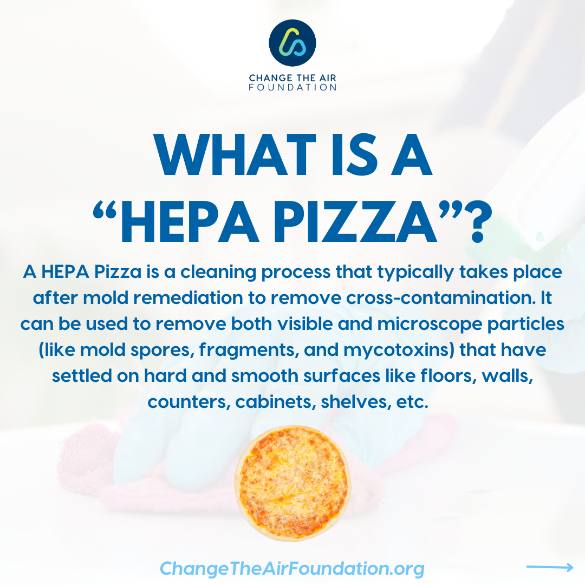
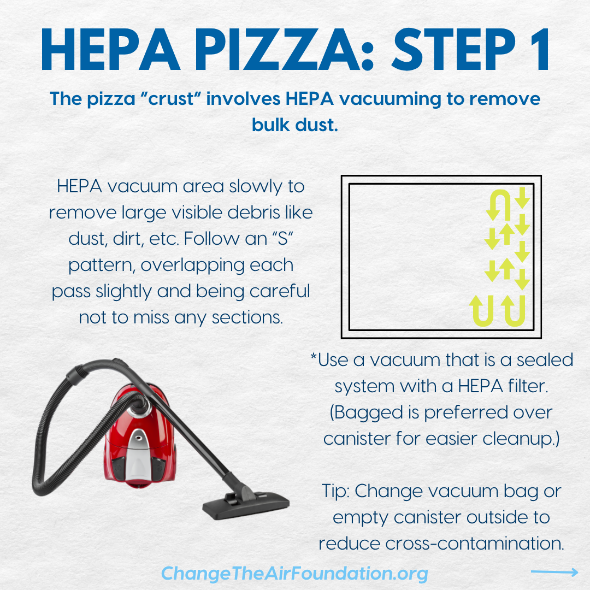
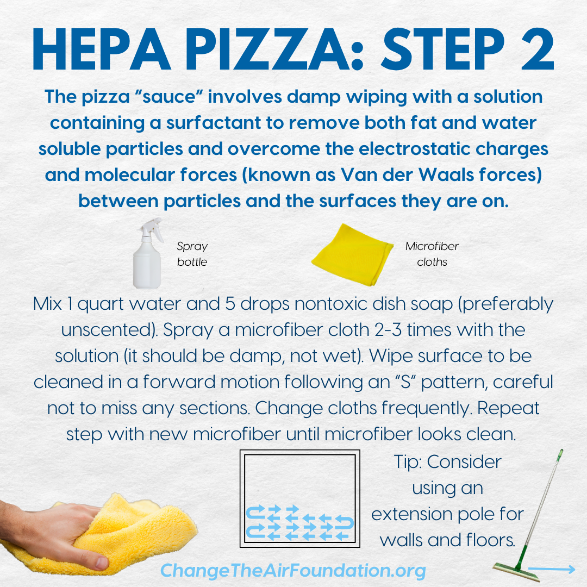
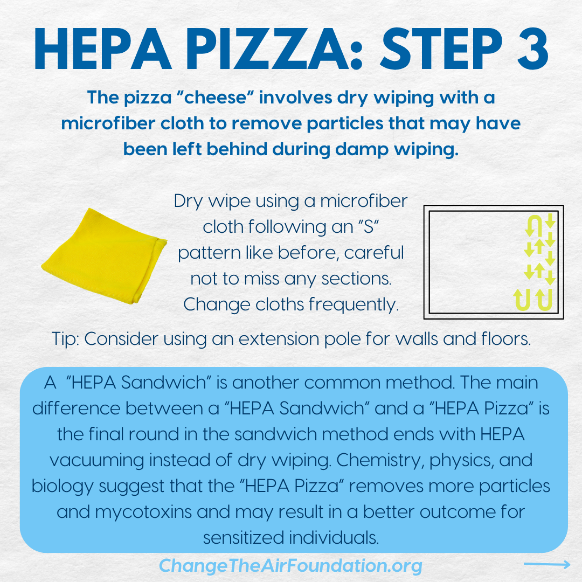
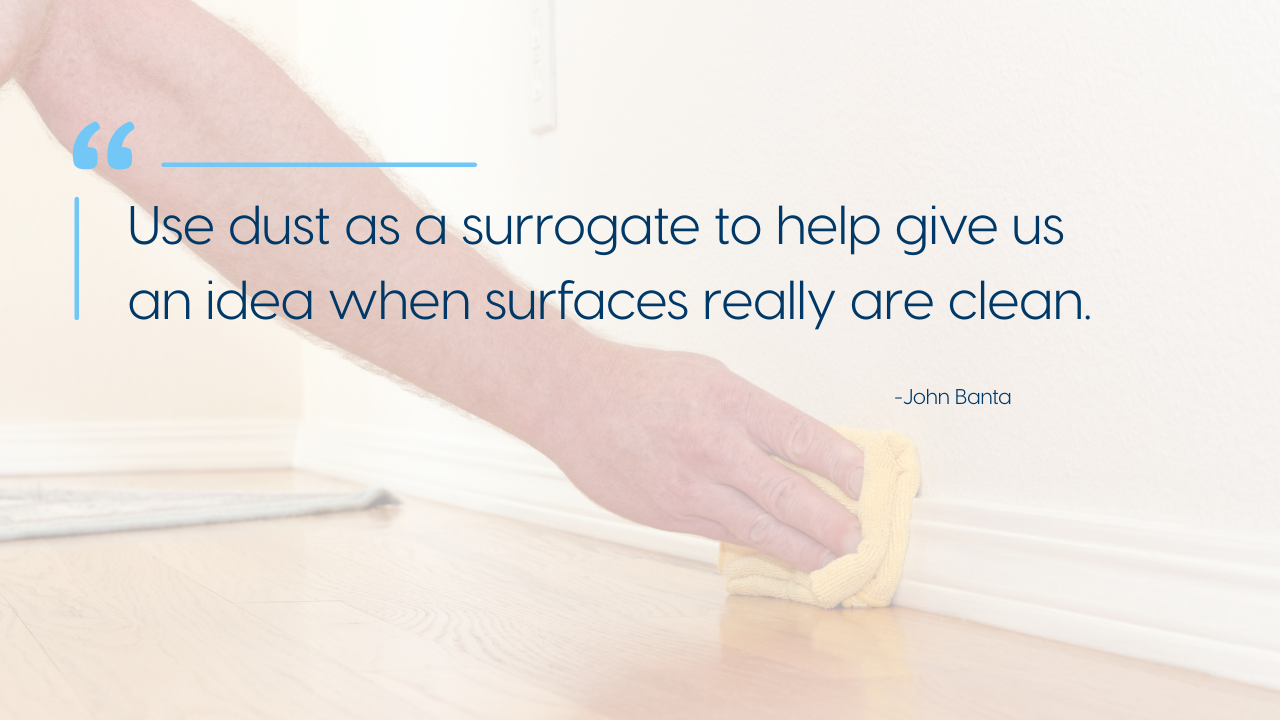
Sometimes, though, it is just a matter of cleaning better and more often. If the idea of small particle cleaning your home overwhelms you, you may find more effective and frequent cleaning alone can reduce exposure so that a person no longer reacts. Effective cleaning doesn’t mean killing, spraying, or fogging harsh chemicals. It can mean vacuuming with a good, sealed HEPA vacuum and damp wiping with a surfactant, water, and microfiber cloths. As John Banta says, “Use dust as a surrogate to help give us an idea when surfaces really are clean.” Spores, fungal fragments, and mycotoxins can settle out of the air and fall onto surfaces during the days and weeks following remediation. Every cleaning can reduce what is on surfaces, which reduces what can be resuspended into the air.
How far you need to go is a very individualized decision. It depends on many factors such as the amount of mold, the type of mold, the type of material, the health and sensitivity of the people in the home, and more. A knowledgeable IEP is the best person to help you determine if and how far cross-contamination may have occurred and the best steps to remedy it based on your unique situation. If your HVAC and/or ductwork is cross-contaminated, a professional should evaluate it to determine if and how cleaning should be done. Just like remediation, the goal is removal.
Cleaning your home after remediation can be a complex topic and is worthy of a much larger explanation, which is why we devoted Step 4 of our Start Here section to just that. There you’ll find helpful tips, a step-by-step video, and a link to a Free Download called “Keep or Toss” from our friends at ISEAI.
So, if you are still symptomatic in the home, ask yourself: Have I done deep cleaning of the rest of the home? Could I be reacting to my belongings? Could my HVAC and/or ductwork be cross-contaminated?
If you want to learn more about cleaning the rest of your home and belongings after remediation, check out these resources:
- Free Download: “Mold Remediation at a Glance”
- Step 4 of Start Here: Mold in the Home
- Mold Remediation Mini Class: Parts 7 & 10
- Free Download from ISEAI: “Keep or Toss: Dealing with Belongings”
- Free Download from ISEAI: “Small Particle Cleaning 101”
- Free Download: HVAC & Duct Cleaning Basics
Question 4: Are there other areas in the home that need remediation?
Before you answer, “Nope,” I want you to think back to the beginning. When you first discovered mold and water damage, who did you call first? Was it an Indoor Environmental Professional (IEP) or a mold remediation company? If you called an IEP, hopefully you started with a thorough inspection (more on that in a moment). If you called a remediation company first, you likely got a free quote and a sales pitch to buy their services.
Let’s unpack the latter first. A free estimate is not an inspection. I repeat, a free estimate does not equal an inspection. For starters, conducting a good mold inspection requires one skill set while remediating a home successfully requires another. A free estimate might take 15-20 minutes of a professional’s time whereas a thorough inspection is multiple hours. An estimate is for an area that has already been identified as problematic whereas a thorough inspection can uncover problematic areas that may have been overlooked.

One of the biggest misconceptions around mold and water damage is that if you had a problem, it would be obvious. But the reality is, mold is often hidden behind walls, under floors, and in hard-to-reach places like HVAC systems, ductwork, attics and crawlspaces. And just because you can’t see or smell mold doesn’t mean it’s not there.
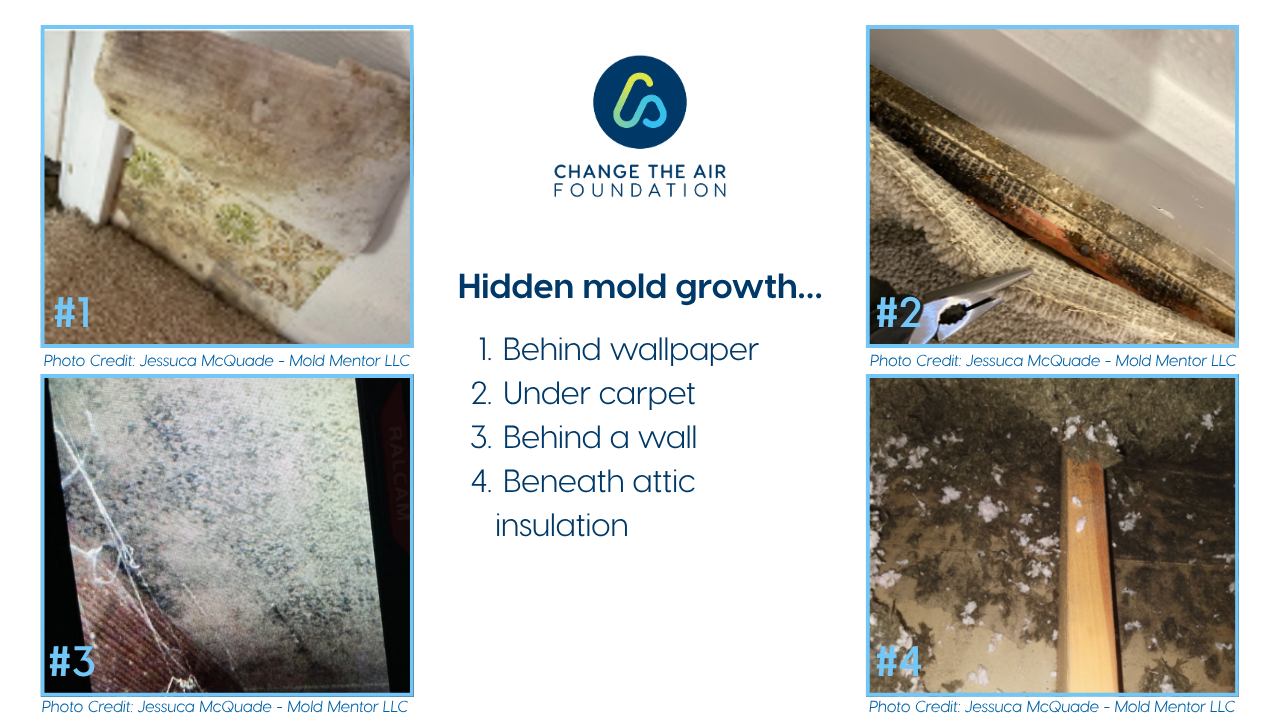
So, if you didn’t have your entire home investigated top to bottom, inside and out, by a knowledgeable IEP, it might be time to call one.
Now, let’s say your first call was to have the home inspected by a third party such as an IEP. Does that mean that there aren’t other areas of microbial growth and water damage in the home? Unfortunately, no. Much like the remediation industry, the mold inspection industry lacks meaningful regulation and oversight. The training and skill sets are just as varied as the names of the people performing these inspections: Indoor Environmental Professional (IEP), mold inspector, mold assessment consultants (MAC), industrial hygienist (IH), and so on. And since certifications are just minimum starting points, it’s critical to thoroughly vet anyone doing a mold and moisture inspection.
Finding a knowledgeable IEP, too, is a topic worthy of its own post, which is why before you hire one, please review Step 1 of our Start Here: Mold in the Home feature. Be sure to download your free copy of “Questions to Ask When Hiring an Indoor Environmental Professional (IEP)” and even consider checking out this video I made on how to find and vet inspection and remediation companies.
So, if you are still reacting to the home, ask yourself: Could there be other areas of mold and water damage? Were there any past areas of mold and water damage that need to be re-evaluated? Have I checked hard-to-reach places like HVACs, ductwork, attics, crawlspaces, and the exterior of the home for grading and drainage issues? What did the first inspection look like, and how were tools and testing used during that inspection?
If you want to learn more about the elements of a thorough mold inspection and how to find a knowledgeable IEP, please check out these resources:
- Step 1 of Start Here: Mold in the Home
- Video: Hiring the Right Team & Order of Operations
- Free Download: “Questions to Ask When Hiring an Indoor Environmental Professional (IEP)”
- Free Download: “5 Signs of Water Damage”
- Free Download: “Moisture Basics”
- Free Download: “Checklist: Where to Look for Mold & Water Damage”
Question 5: Are you reacting to a chemical or product used during remediation?
There is nothing worse than spending money to remove one potentially irritating or hazardous thing (mold) from your home and swapping it for another (harsh chemicals).
If you haven’t read Question 1 yet, it’s worth going back. That section covers what safe and effective remediation actually looks like, including why chemical-only shortcuts like bleaching or spraying are not a substitute for physical removal of mold growth. But “spray and pray” isn’t the only place chemicals show up during remediation. Even when the actual removal is done right, chemicals can still enter the picture in ways that could create their own exposure risk.
So why are harsh chemicals a default for so many remediation projects? This usually happens for one of three reasons: some companies still believe the goal is to “kill” mold rather than remove it; some companies treat chemicals almost as an “insurance” policy that the mold is gone; and sometimes, it’s just an upsell. None of these are good reasons.
You may see chemicals show up in several places during remediation, including cleaning surfaces, fogging, and mold-resistant coatings or encapsulants. We covered cleaning in Questions 1 and 3, so let’s focus on the other two. The general purpose of fogging is to suppress dust and help airborne particles fall to the ground so they can be wiped away. But if you don’t follow up fogging with wiping, those particles can become resuspended into the air. You also must weigh the benefits of this type of particle suppression against the potential of reacting to a chemical that was fogged all over your house and belongings.
Encapsulants are coatings or sealants that may be marketed as “sealing in” mold that, in most cases, should have been removed in the first place. If you are trying to prevent regrowth, stop the moisture from returning. Paint won’t do that.
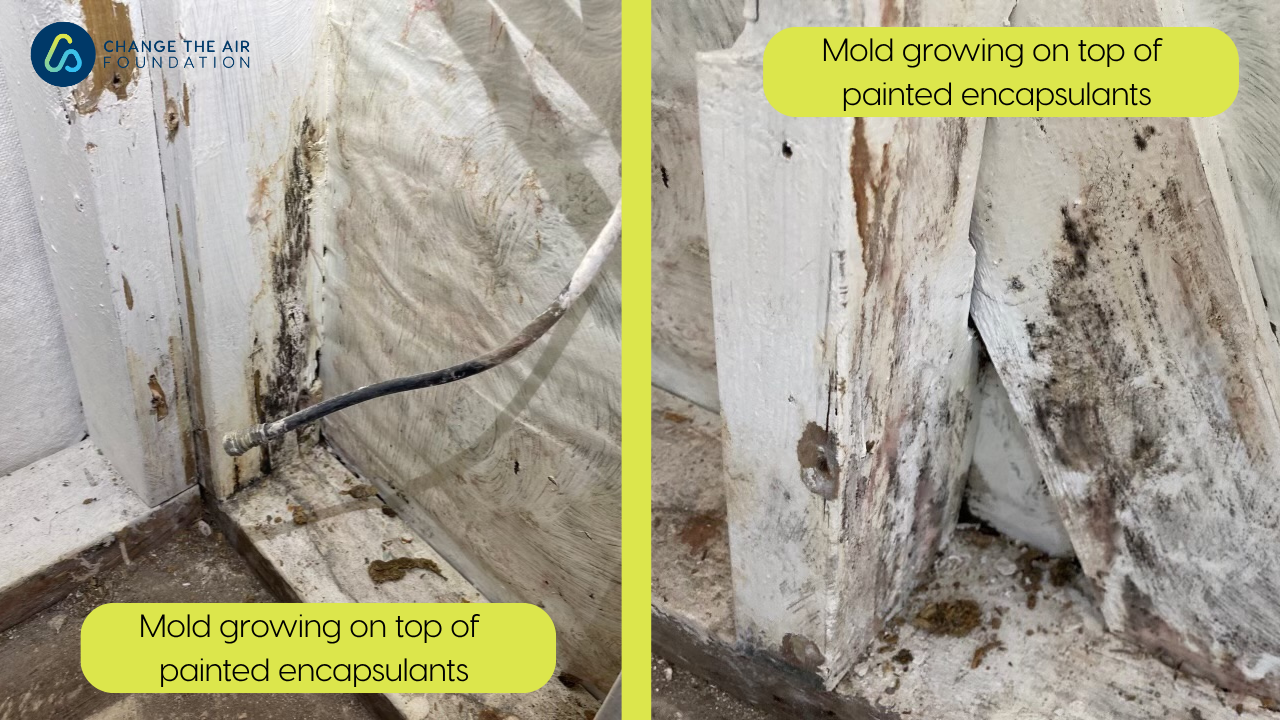
Neither fogging nor use of coatings or encapsulants is required by the ANSI/IICRC S520 standard. The S520 says it pretty clearly:
“Ozone and biocides intended for use and delivery as a gas or vapor should not be used to attempt to kill mold as part of the remediation process and should not be used as a substitute for source removal. This includes utilizing a variety of chemicals and technology as a stand-alone remediation process; including hydroxyl radical generators, UV lights, photo catalytic oxidation, fogging of enzymes, diffusion of essential oils, or other techniques employed as an alternative to physical removal of the fungal material. Antimicrobial devices shall be registered by the responsible AHJ.” [Section 9.1.7 Ozone Gas and Other Antimicrobial Devices]
“Mold resistant coatings should not be used as ‘sealants’ or ‘encapsulants’ to contain or cover mold growth.” [Section 2.2.1 Coatings – Limitations of Use]
To make matters worse, companies don’t always follow the product label for proper application techniques, ventilation, PPE, etc. For example, if a product is not designed and registered to be used in your HVAC ductwork, do not allow the company to spray it into your ductwork where it can’t be removed and you risk exposure every time the heat or air conditioner turns on. Using a chemical inconsistent with the recommendations on the label creates another layer of potentially problematic exposure to both the workers and people in the home, and may even be illegal.
The ANIS/IICRC S520 Standard spells it out nicely:
“Remediations shall follow label directions carefully and explicitly for efficacy, safety, and compliance with regulations. Improper use of cleaners, chemicals, and coatings of all types can have unintended consequences (i.e., misuse can harm humans, pets, wildlife, and property). If an application method of an antimicrobial is not listed on the EPA enforced container label, it is illegal to use that application…” [Section 2.1.2 Cleaner, Stain-Remover and Antimicrobial Application]
Even if you don’t have Chemical Intolerance (CI) or Multiple Chemical Sensitivity (MCS), reducing exposure is wise because odors and residues can remain irritating even after the remediation is complete.
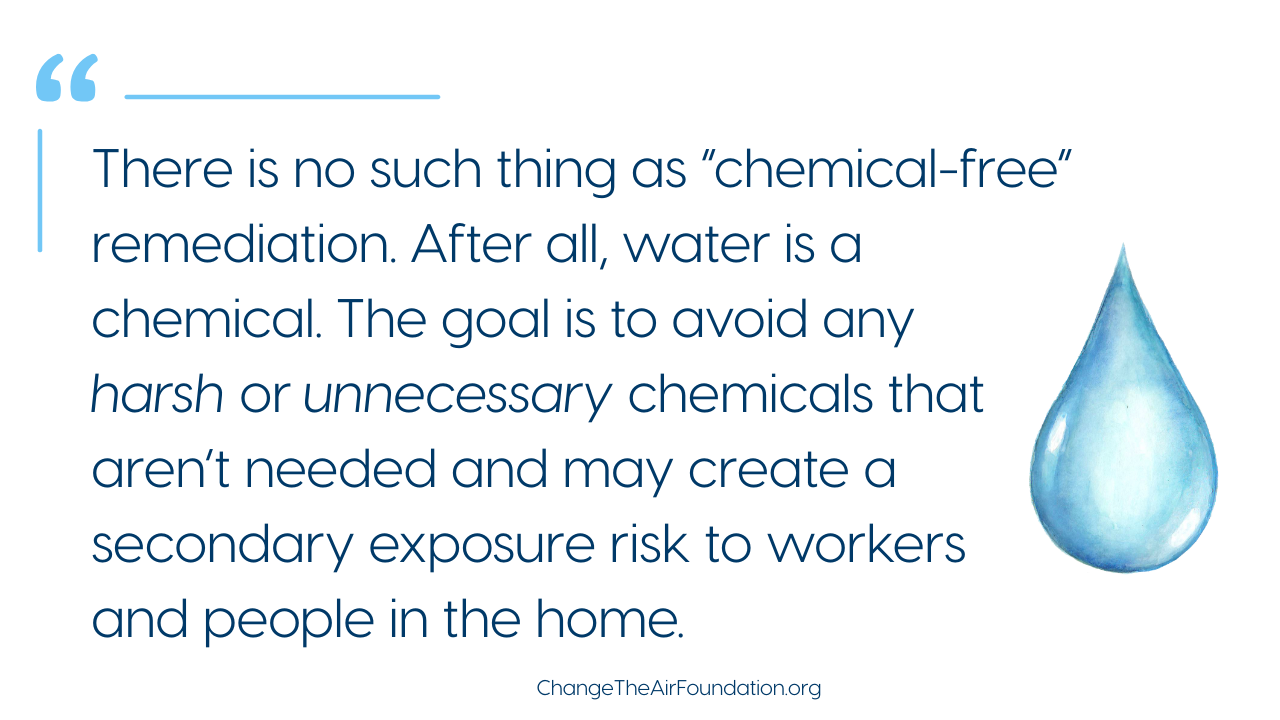
So, should remediation involve zero chemicals? Not exactly. There is no such thing as “chemical-free” remediation. After all, water is a chemical. The goal is to avoid any harsh or unnecessary chemicals that may create a secondary exposure risk to workers and people in the home.
For example, after mold growth is physically removed, a good company may perform the “HEPA sandwich” or “HEPA pizza” we talked about earlier. The damp wipe step can be as simple as a surfactant (such as what is found in unscented dish soap), water, and microfiber cloths. This combination, while simple, is quite effective at removing both fat- and water-soluble particles, including mycotoxins, that may have settled on surfaces.
Our free guide, “Mold Remediation at a Glance,” has a special section dedicated to chemicals and explores the topic using three key questions: Is the chemical safe? Is the chemical effective? Is the chemical needed? And just like the PRV criteria in Question 2, this is something to determine in writing before work begins. Always ask for a list of every product the company plans to use, where it will be used, and how it will be used.
So, if you have symptoms in the home after remediation, ask yourself: Are there any new odors or residues since remediation? What chemicals were used, where, and how? Was anything sprayed or fogged around the home or in the ductwork?
If you want to learn more about the role of chemicals in mold remediation, please visit:
- Step 2 of Start Here: Mold in the Home
- Step 4 of Start Here: Mold in the Home
- Free Download: “Mold Remediation at a Glance”
- Article: “Why Can’t I Just “Spray” the Mold Away?”
- Mold Remediation Mini Class: Part 8
Question 6: Are you reacting to something else in the home?
It’s not always just mold. Sometimes there are other pollutants in the home that can cause health symptoms. And just like mold, you can’t always see or smell them.
Case in point: several years ago, I was helping a friend navigate some mold and water damage in her home. We were confident that the inspection had found all the areas of mold and water damage. We were confident it was removed safely and cross-contamination was no longer a factor. Yet, her family was still having headaches and a few lingering symptoms. She was obviously frustrated because she thought she did everything right. And she did. At least when it came to mold and water damage. So, we brainstormed some more. We thought about other factors in the home that might be impacting their health, and carbon monoxide (CO) came to mind. Now, like many of us, she had a carbon monoxide alarm. It was the standard kind that goes off when CO is high and sustained, the kind that means you need to get people and pets out of the house immediately or risk serious health consequences, even death. What she hadn’t considered is that you can have low-level CO exposure that can trigger flu-like symptoms, headaches, and more, yet, never triggers a standard alarm.
We made a plan for her to have the home evaluated. A few weeks later, I got a call. Turns out her gas range was leaking low levels of carbon monoxide. As soon as it was repaired, the headaches and remaining symptoms went away.
This is why we recommend every home have an alarm rated for low-level exposure in addition to a standard one. If you haven’t yet, please check out our interview, Carbon Monoxide 101: Testing & Prevention, with Charon McNabb.
There are plenty of stories across the internet and in the news of people reacting to everything from VOCs in carpet to paints, furniture, sewer gas, pesticides, and even pests! I recently had a family member who found a dead mouse in an HVAC duct. It was only discovered after the they started complaining of odors and irritation following installation of an ozone-producing air purifier on their HVAC (not something we recommend). They ultimately removed the air purifier (and asked for a refund) and removed the dead mouse (and his friends).
If you still have symptoms in the home, it may be worth exploring other potential hazards in the home. Ask yourself: Could carbon monoxide, radon, or sewer gas be a problem? Is there new paint, furniture, or flooring that I might be reacting to? Are there any cleaning products, candles, or air fresheners in the home? Are there any air cleaners, air purifiers, or UV lights that might be releasing chemicals or byproducts into the air?
For more resources on other indoor air pollutants in homes and buildings, please check out these resources:
- Carbon Monoxide 101: Testing & Prevention with Charon McNabb
- Radon 101: Test, Mitigate, Breathe Easy with Zan Jones
- The Truth About VOCs, Greenwashing, and Healthy Homes: Part 1 with Andy Pace
- Flame Retardants, Formaldehyde & Your Indoor Air with Lara Adler
- Understanding Air Cleaners & Air Purifiers with Carl Grimes
- Free Download: Sources & Solutions for Poor Indoor Air Quality
Question 7: Does your body need additional support to heal?
I am not a doctor. But I do know firsthand what it means to get sick from mold. I remember years of symptoms that felt unconnected. I remember years of mismatched treatments that never seemed to fix anything. I remember being told, “Mold can only cause asthma and allergy-type symptoms.” I remember being gaslit for even asking questions about mold and health.
I have also had the privilege of interviewing many smart healthcare practitioners who specialize in helping people who were made sick by their environments. If there is one thing I've taken from those conversations, it's this: the body is designed to heal. It just sometimes needs a little help.
The first thing to know is that healing takes time, and it doesn't happen on a schedule. Some people remediate and notice improvement within days or weeks. Others take months. In some cases, people may even feel a little worse before they feel better. I've also seen that healing isn't always linear. You may have a good stretch, then a setback, then another good stretch. That doesn't necessarily mean something is wrong. So, before you assume the remediation “failed,” ask yourself how long it's been. Your body spent a long time in that environment. It may need a while to catch up now that the exposure is gone.
A second important thing to know is that the medical profession's understanding of how mold and bacteria from water-damaged buildings affect human health is constantly evolving. For decades, doctors were taught that mold exposure produced an allergic response. In the late 1990s, doctors who suggested there was a genetic component to why some individuals suffered more extreme reactions were initially dismissed. Eventually, less expensive DNA testing validated that observation. In the 2000s, the idea that mold exposure could lead to multi-symptom, multi-system illness, now known as Chronic Inflammatory Response Syndrome (CIRS), emerged. Over the last few decades, more and more research has emerged helping us understand the connection between damp indoor spaces and health. The NIEHS now recognizes health effects that go well beyond allergy- and asthma-type symptoms to include cognitive issues such as brain fog and memory loss, mental health effects including depression and anxiety, immune system changes, and certain cancers linked to mycotoxin exposure. That is a significant shift from, “Mold can only cause allergy-type symptoms,” and it matters for anyone who has been told otherwise.
Third, for some people, healing isn't something the body can do on its own. The practitioners I've interviewed describe a range of things they look at when someone isn't improving: immune system dysfunction, poor detoxing, colonization, dysregulation of the nervous system, and other issues that mold and bacteria exposure can unmask or worsen, such as viruses, Lyme and co-infections, heavy metals, or parasites. I'm not going to attempt to explain any of that here. That's their expertise, not mine. But I share it so you know that “I fixed the house and I'm still sick” can have a distinct medical component, not just an environmental one. The good news is that practitioners who specialize in this hear your story all the time, and they can help.
It's also worth knowing that while there are a variety of treatment philosophies when it comes to mold-related illness, there is general consensus on one thing: ongoing exposure has to be eliminated or reduced for treatment to be effective. Which is exactly why this is Question 7 and not Question 1.
So, if you are still having symptoms after remediation, and you have honestly worked through the first six questions, it may be time to get your body help. If you aren’t already working with a mold-literate healthcare practitioner, now might be a good time to find one. If there's still ongoing exposure in the home, no amount of treatment will outrun it. Ask yourself: Have I given my body enough time? Have I truly ruled out Questions 1 through 6, or did I skip one? Is my current practitioner familiar with environmental illness, or do I need to find one who is?
A complete list of all our health-focused interviews and resources can be found here. A few highlights include:
- Article: 17 Essential Questions to Ask a Medical Provider When Dealing With Indoor Environmental Illness by Jenny Johnson
- Article: Medical Gaslighting: What to Do When Doctors Dismiss You by Kristie Calise
- Healing from Chronic Lyme Disease, Mold Related Illness, and other Biotoxins with Scott Forsgren
- More Than An Allergy with Dr. Sandeep Gupta
- From Toxic to Treated: Part 1 with Dr. Neil Nathan
- Understanding the Role of Mold in Your Body & Home with Dr. Jill Crista
- Why Fundamentals Come First: A Practical Approach to Mold Toxicity with Dr. Joe Mather
- Navigating Mold-Related Illness in Children with Dr. Pejman Katiraei
Final Thoughts:
There are lots of reasons why someone may still be having health symptoms after mold remediation. When that happens, it’s best to take a step back and ask what may have been missed. Whether it was a botched remediation job, an overlooked moisture source, another pollutant in the home, or something else, I hope this article has provided a helpful framework to reevaluate what you have done up to this point so you can figure out the best next step for your situation.
About the Author:
Kendra Seymour is the Co-Founder and Executive Director of Change the Air Foundation. A mother of two, she discovered hidden mold and water damage in her own home was harming her family's health, and has spent the years since helping others navigate the same journey. She oversees the foundation's programs, content creation, and outreach.
Expert Reviewer:This article was reviewed for accuracy by Michael A. Pinto, Strategic Advisor to Change the Air Foundation and principal consultant at Pinto Solutions LLC. With over 40 years of experience in industrial hygiene and environmental consulting, Michael is the author of more than 230 published articles and several books, including Fungal Contamination: A Comprehensive Guide for Remediation. He holds numerous safety and environmental certifications including Certified Safety Professional (CSP, retired) and Certified Mold Professional (CMP).
Disclaimer: This article is for general informational purposes only and does not constitute the practice of medicine, nursing, or other professional healthcare services, including the giving of medical advice. The content is not intended to be a substitute for professional medical care. Users should not disregard professional medical advice or delay seeking it because of something they have read in this article, and should consult a qualified healthcare provider with any questions about a medical condition. Use of the information in this article is at the reader's own risk.